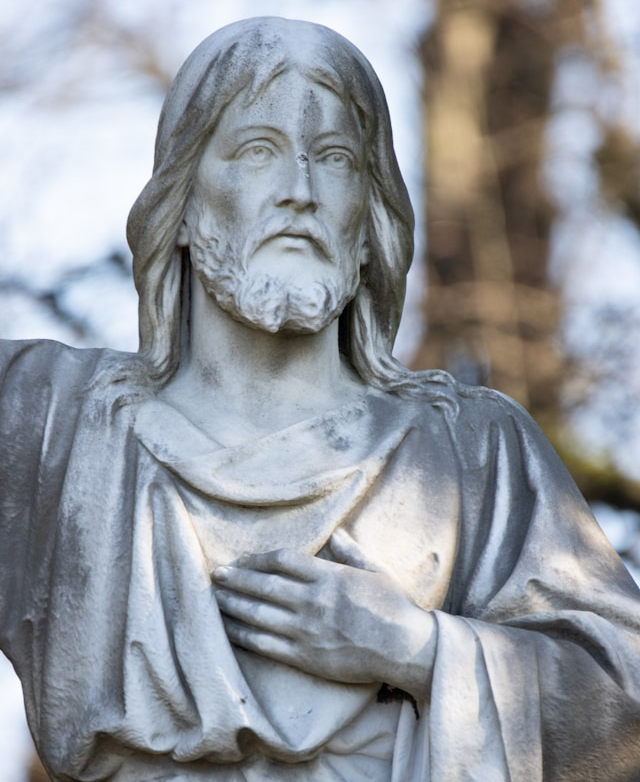
One of the things that strikes me about today’s gospel (Mark 10:46-52) is Jesus’ question to Bartimaeus, “What do you want me to do for you?”
My first reaction is, “He’s blind. What do you think he wants you to do? He wants to see again.” But then I think about times in my life when I didn’t want to see a truth, when I turned a blind eye to people or circumstances, when it felt easier and safer to close my eyes than deal with what was before my eyes.
Have you ever done that? I suspect we all have.
Maybe that’s why Jesus asks the question. Maybe we’re sometimes blind to the ways we prefer to remain blind. Maybe we’re always moving in and out of blindness and seeing. Maybe there are parts of our lives today that have sight and parts that are blind. Maybe that’s true for our community and country as well. Maybe seeing and blindness are choices we make. Do we really want to see?
What if we approached every moment, circumstance, relationship, and person saying, “Let me see again”? What if we really wanted to see what is there? What if that was our unceasing prayer? And what if that also was a confession of our blindness?
When I talk about confessing our blindness I’m really talking about a diagnosis not a guilty plea. We cover ourselves in a cloak of blindness in a thousand different ways.
Sometimes familiarity, comfort, and routine can keep us from seeing something new. Certainty can blind us to seeing other options or possibilities, and even the truth. The need for approval, to be right, or to be in control are powerful blinders. Being a member of the dominant culture can blind us to the experiences of those who are not.
We all see through lenses of past experiences and memories but sometimes those lenses become cloudy and opaque and we don’t even notice we’re not seeing as well as we used to. Grief and loss or guilt and shame can be a cataracts to the future.
Fear and prejudice can cause us to hallucinate and see something that’s not really there. When we fail to speak against injustice, violence, oppression; when we don’t take action to heal and restore lives; we have turned a blind eye.
So here’s what I wonder about our seeing. What if the people, relationships, and circumstances in our lives are a daily eye exam and the gospel is the eye chart? What’s your diagnosis? In what ways is your vision impaired? What’s distorting the way you see?
And what would it be like and what would it take to throw off the cloak of your blindness? Do we really want to see our world, one another, ourselves? Sometimes we don’t. Sometimes we refuse to see.
Seeing can be painful, scary, or overwhelming. We might not like what we see. What we see might be different from us or even contradict us. It might make us angry or defensive. It might bring up guilt or shame. It might reveal unhelpful and unhealthy patterns of believing and behaving. It might ask us to change and live differently. It might call into question our beliefs, attitudes, and opinions. It might reveal brokenness, injustice, and the opportunities to make a difference.
Seeing might also inspire and encourage us. It might open us to a new vision for our life and world. Perhaps we’d see something that gives us hope and helps us remain open to the future. Maybe we’d see something that reminds us that we are a part of something much larger than and beyond ourselves. Maybe we’d be given new insights to ourselves. Maybe we’d see the beauty of creation, the wonder of life, or the mystery of love again for the very first time. Maybe we’d see new relationships and ways of being.
The seeing that I’m talking about is seeing with the eye of the heart. It means seeing deeply, with wisdom, and through the lens of the gospel. We might call this the second seeing.
For most of us the temptation and default is the first seeing. We live as spectators of people and objects. We don’t look below the surface. But how we see changes what we see. And we sure could use a change of scenery these days.
I wonder if Bartimaeus has experienced both of these seeings. Here’s why I say that. He says to Jesus, “My teacher, let me see again.” Did you catch that? He wants to see “again” meaning there was a time before the blindness that he saw. He’s choosing a second seeing.
What if his blindness isn’t the deficit we often think it is, but a necessary precursor and a transition to seeing with the eye of the heart? Maybe out of his darkness he is being made a new creation just like “in the beginning when … darkness covered the face of the deep” and “God said, ‘Let there be light.’” Maybe we have to be blind before we can see agin. Maybe Bartimaeus’ eyes are being opened to a new world, a new life, and a new way of being. Maybe that’s why he threw off his cloak, left his spot on the road, and followed Jesus on the way.
And what if that’s happening for us too? Every day we are given opportunities to discover our blindness and see again. Let me give you a couple of recent examples of my blindness and seeing again.
- On Saturday our sexton, Jesús, called me at home. He said, “I’m at the sports court getting some wood that I had stored here.” I didn’t understand why he was telling me this. “Okay,” I said, blind to what he sees. He said, “The church and school are closed today and I wanted you to know I’m here in case someone calls or says something about it.
And my eyes were opened. I’m an old white guy and part of the dominant culture. He’s not and it’s a different experience when you’re not. As painful as it is I want to see more. I want to see my way to a different culture in which that phone call isn’t necessary. - I know a woman whose son survived the Robb School shooting but won’t leave the house and hasn’t gone to school in two years. I recently referred them to the Children’s Bereavement Center and suggested that her son attend a new afternoon program that offers tutoring, relationship building, and grief work. A couple of days later his mother told me that he only stayed for half of the first session but she said it was the first time she’d seen him smile in two years and he told her he wanted to go back.
And my eyes were opened. Sometimes the pain and needs of Uvalde following the shooting blind me and keep me from seeing that healing is also happening and people are making a difference. I want to see more. I want to see my way into a web of hope, healing, and resiliency.
What about you? I hope you are here today because you want to see again, to see more, and to name the truth. That’s what I want for us. I want us to see again and again, to see more and more, and to name the ruth over and over. I want us to see our way into a different world, a new way of being with one another, and a more abundant life for everyone.
What is blinding you and what is opening your eyes these days? What are you seeing? What difference is it making in your life? And what is it asking of you? How is what you are seeing calling and shaping you to follow Jesus on the way?
____________________
Image Credit: Photo by Marek Studzinski on Unsplash.


 Interrupting the Silence
Leave a reply to nanama17yahoocom Cancel reply