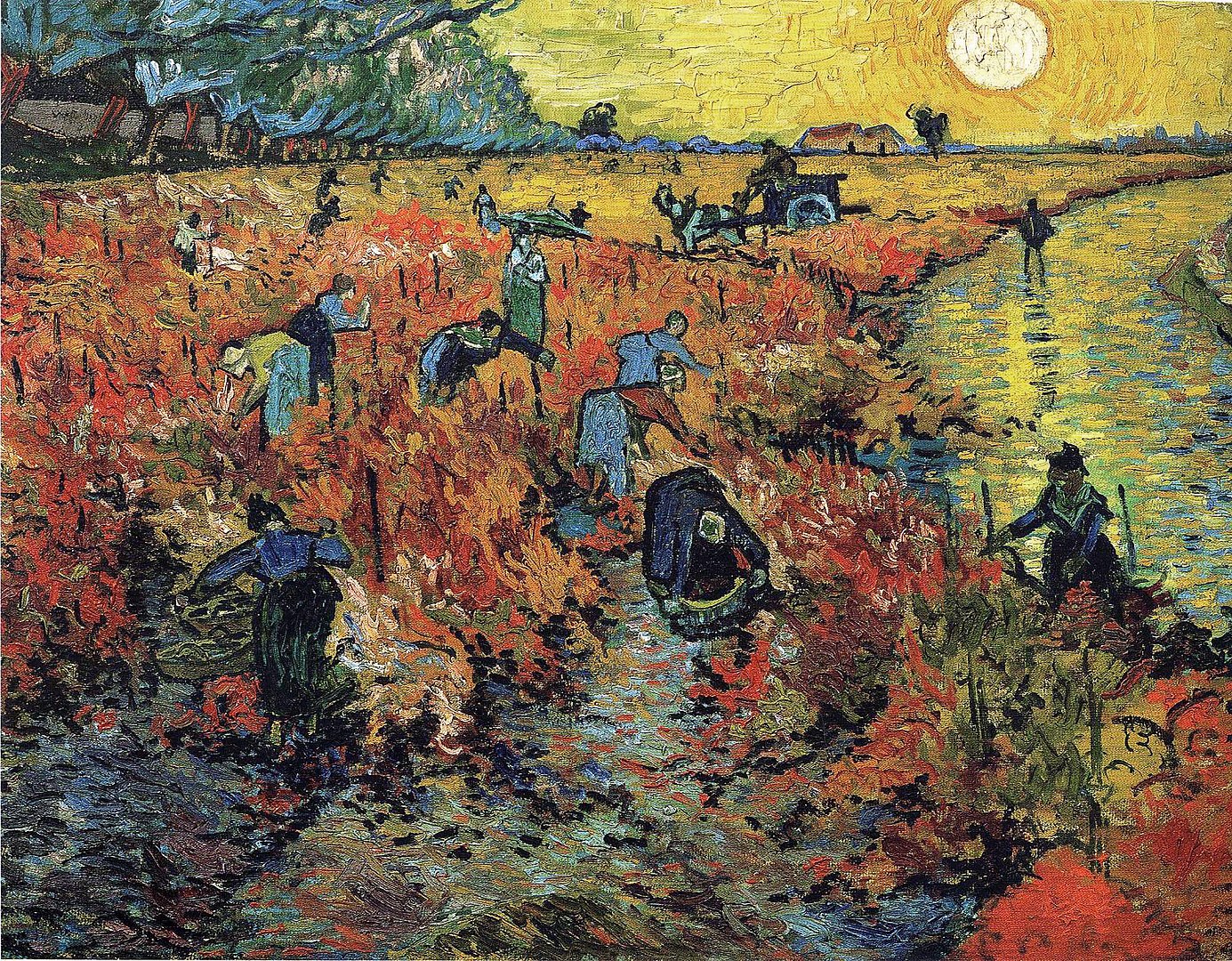
Several years ago a friend called me about the sermon she had preached the day before. She was not happy with how it went. She said, “I gave a really good sermon yesterday. And someone said to me, ‘Thank you. I really enjoyed your sermon.’” She said, “I didn’t want them to enjoy the sermon. I wanted them to be offended, upset, and bothered by it.”
I think that’s the kind of response Jesus wants from us when we hear today’s gospel (Matthew 20:1-16) We should be offended by it or at least uncomfortable with it. It’s a story designed and intended to offend, upset, and bother. It ought to make us say, “Something isn’t right.”
For most us, I suspect, that something is the unfairness in the story. That’s my initial reaction. It’s not fair. And if there’s anything we want it’s fairness (at least for ourselves). The fairness standard starts early, when we are children, and most of us don’t outgrow it. We all have our stories and experiences of unfairness.
It wasn’t fair the night my grandmother made my sister and I eat lima beans for supper. I expected that from my parents but not from Bum Bum. Grandmothers aren’t supposed to do that. It was even more unfair when she gave me twelve lima beans and gave my sister only eight. (Yes, I counted them.)
It wasn’t fair that a law school classmate of mine, who rarely came to class, borrowed my notes to study for the exam and got a better grade than me.
It wasn’t fair that I, as an associate lawyer in the firm, billed and collected more dollars than some partners but got paid less than those partners.

And in today’s gospel it’s not fair that someone who works twelve hours gets paid the same amount as someone who works only one hour. The twelve hour workers are absolutely correct when they say to the landowner about the one hour workers, “You have made them equal to us.”
But Jesus says that’s what the kingdom of heaven is like. It makes no difference that some work twelve hours, some nine, some six, some three, and some work only one hour. Regardless, each one received what she or he needed, the usual daily wage.
That’s what the kingdom of heaven is like. One worker isn’t worth more than another. It’s less about fairness and more about equality. Each one receives what he or she needs. Have you ever thought that that’s what we are praying for every week when we say, “Thy kingdom come”? Well get ready because we are going to pray those words again in just a bit.
So if that’s what the kingdom of heaven is like and if Jesus taught us to pray, “Thy kingdom come,” maybe we shouldn’t be offended by the unfairness, the equality, or that each receives what is needed. Maybe we should be outraged that our lives, relationships, and community are not more like the kingdom we pray to come. Maybe that’s what Jesus wants from us when we hear today’s gospel. Maybe he wants us to be so upset and riled up that we do something to bring about change.
What would it be like and what would it take to begin aligning our lives a bit more closely with the kingdom of heaven as Jesus describes it today? As with most of Jesus’ teachings that starts not with looking at the other but with taking a look at ourselves.
I like to think of myself as a twelve hour worker. I show up early. I work long and I work hard. I deserve what I get. Maybe so. Some days I am a twelve hour worker. But if I’m really honest with myself and with you I’m not always a twelve hour worker. There are those other days.
A few months after last year’s shooting I was struggling to prepare a sermon. I just didn’t have it in me. I was exhausted and broken. I had nothing to say to you. I called my best friend and mentor. I was crying as I told him what was going on. He said, “I’ll call you back.” A few hours later he called and said, “I’m emailing you my notes for a sermon. Rewrite them. Make them yours. And get some rest.” I wasn’t even a one hour worker that day. It was all grace and gift.
I’m betting you’ve had times like that too, times when another stepped into the gap, carried you, and did for you what you couldn’t do for yourself. Maybe that’s what the landowner is doing in today’s gospel. It’s not fair but that’s what the kingdom of heaven is like. What if we opened ourselves to be that someone for another? Who needs you to be that someone for her or him today?
But then I wonder if they deserve that. Are they worthy of that gift and grace? How crazy is that? Who am I to even ask that kind of question? It’s another reminder that we often hold others to a standard that we don’t, won’t, or can’t hold ourselves to.
Most of us have been shaped and influenced by meritocracy. Merit is at the heart of our fairness standard. We’ve been told to earn our keep and that the early bird gets the worm. That may be the way we think but it’s not how the landowner thinks. He or she knows that the late birds are also hungry and that there are enough worms for every bird. That the late birds get a worm doesn’t take away the worm the early birds got. Or as the landowner says, “Friend, I am doing you no wrong.” It’s not fair but that’s what the kingdom of heaven is like.
What if we began to live like that? In what ways is meritocracy controlling your life, defining your value, and distorting the way you see others?
I’ve had times in my life when I didn’t see others. I profiled them. I looked at their appearance and actions, listened to what they said, and then made conclusions, assigned motives, and attributed qualities. Maybe you’ve done that too. It’s easy to assume we know more than we really do or can. I think we often do that with the workers in today’s gospel.
The twelve hour workers are dedicated, hard working, and responsible. The one hour workers are late, lazy, and irresponsible. Maybe that’s all true. But maybe it’s not. We don’t know. The story doesn’t tell us.
Maybe the twelve hour workers had donkeys to ride to work. Maybe the nine hours workers walked from another town. Maybe the six hour workers just woke up after a night shift. Maybe the three hour workers were taking care of a sick child or a dying parent. Maybe the one hour workers had just finished another job but still didn’t have enough.
We don’t know why each worker showed up when he or she did. We only know that they showed up and that was enough for the landowner. It’s not fair but that’s what the kingdom of heaven is like.
Are we willing to create space for another to simply show up? It’s easy to say, “Yes, of course. All are welcome.” But in the kingdom of heaven that means doing so without the other having to justify her or his presence and without us judging, categorizing, or evaluating her or his value.
When I require justification, when I need to win or be right, when I judge, categorize, or evaluate another’s value, I am living out of my deficit. I have forgotten that the fullness of my life is because I’ve already received the grace and favor described in today’s gospel. And then, more often than not, I refuse that same grace and favor to others.
I wonder if that’s what happened to Jaahnavi Kandula. Do you know her name? You may have read about her in the news. She was killed in a crosswalk when she was struck by a police car responding to an overdose. A police officer (not the driver) can be heard on a recently released body-cam talking with another officer, laughing, and saying, “No, it’s a regular person. Yeah. Yeah, just write a check. $11,000. She was 26 anyway, she had limited value.”
Would she have had more value if she was a man? If she was older? If she was white instead of brown? If she was from America instead of India? If she were more than a regular person?
No. Absolutely not. That’s not how it is in the kingdom and that’s not how it’s supposed to be on earth. That’s why week after week, day after day, we pray, “Thy kingdom come.”
Jaahnavi has infinite value. She’s always had infinite value. She always will have infinite value. But so do you and so do I. So does every one of the workers in today’s gospel. So does the police officer who struck her and, as much as it pains me to say it, as much as I don’t want to admit it, so does the police officer who made those comments. It’s not fair but that’s what the kingdom of heaven is like.
“Thy kingdom come … on earth as it is in heaven.” Can I get an “amen”?
Now go live your amen and bring the kingdom of heaven to earth.
____________________
Image Credit
+ Vincent van Gogh – History of the Red Vineyard by Anna Boch.com, 2nd upload: wikipaintings, Public Domain, Wikimedia.
+ Photo by Andrea Cairone on Unsplash


 Interrupting the Silence
Leave a reply to Michael K. Marsh Cancel reply