First Sunday after the Epiphany – The Baptism of our Lord – Mark 1:4-11, Acts 19:1-7
_______________
Last week, some of you may remember, I ended my sermon by asking this question: Will we, in 2021, be different from and better than how we were in 2020?
There’s not much about the first ten days of 2021 that suggests we will. I think it’s still an open question and, I hope, still a possibility. But after the events of last Wednesday and the assault on our nation’s capitol I’m just not so sure we will be.
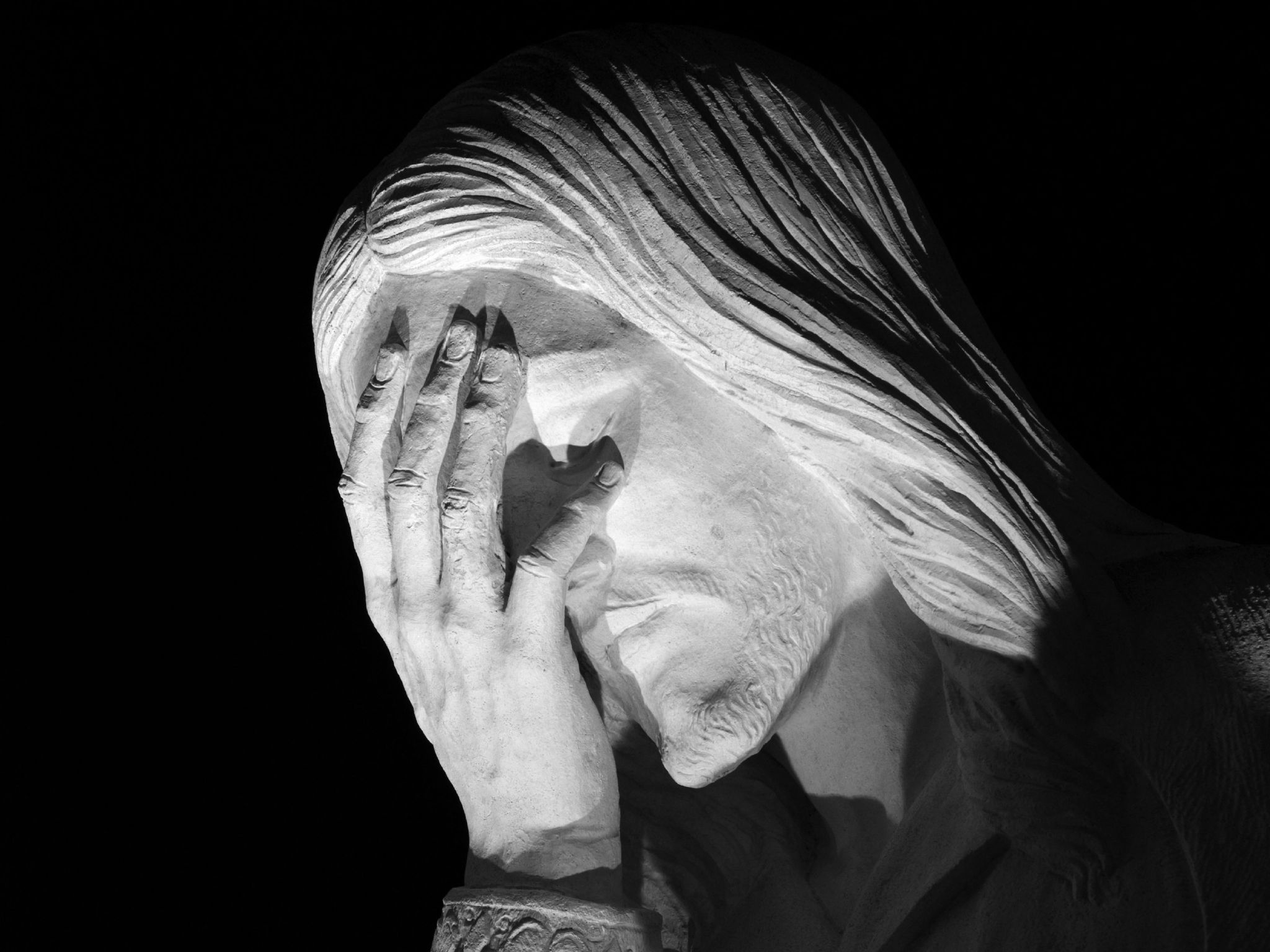
I know the usual responses. “That’s not who America is. We’re better than that.” “That’s not how I believe and I do not support that kind of behavior.” “I wasn’t there. I didn’t do that.” “It was the work of an extremist element or a fringe group.” “It’s the fault of Republican leaders.” “It’s the fault of Democratic leaders.” “That doesn’t represent me or my politics.”
I know the usual responses because I’ve heard them over and over through the years. I suspect you have too. I know the usual responses because I’ve sometimes said them. Maybe you have too.
I truly hope that’s not who you and I are, that we don’t participate in or support that kind of behavior, and that it doesn’t represent us or what we believe. But denial, distancing, and blaming others are not enough. That does not make us different from or better than how we were before.
As I reflect on the events of last Wednesday I keep going back to words from Rabbi Abraham Joshua Heschel, words that I’ve quoted to you before:
“Few are guilty, but all are responsible.”1
“All are responsible.” That includes you and me.
Every time something like this past Wednesday happens we trot out the usual responses and say our prayers, but nothing changes. Change will begin only when we take responsibility for actually being different from and better than how we were before. And that’s about our baptism. Through it “we are reborn by the Holy Spirit” and “raised to the new life of grace.”2
Baptism is a declaration and reminder that we already are beloved sons and daughters of God. It’s not meant to change God’s mind about us. It’s meant to change our minds about ourselves and one another. It’s more than a day in our life. It’s to be the way of our life. It means letting the waters that were poured over us on a particular day flow through us every day – the waters of love, compassion, justice, forgiveness, and healing. Baptism is a call, awaiting our response. It’s an open door to a new life different from and better than the old one.
What does that look like and mean for your life today? What is your baptismal responsibility after the events of this past Wednesday?
I hope you know that I am asking about more than only what happened this past Wednesday. That day is, however, a backdrop to everything I am saying. And so are a hundred other days just like it. In a sermon about baptism, how can they not be?
- How can we close our eyes and ears to the sights and sounds of violence and injustice anywhere when we, in our baptismal vows3, have promised to “strive for justice and peace among all people?”
- How can we say we have no need of or concern for certain people or groups when we have promised to “seek and serve Christ in all persons, loving [our] neighbor as [ourselves]?”
- How can we talk about and treat one another as we have been when we have promised to “respect the dignity of every human being?”
- How can we not let the gospel inform our political beliefs and actions when we have promised to “proclaim by word and example the Good News of God in Christ?”
- How can we abdicate our responsibility to God, one another, and our nation, when we have promised to “persevere in resisting evil, and whenever [we] fall into sin, [to] repent and return to the Lord?”
There’s only one answer to those questions. We can’t and we shouldn’t. And if we are, maybe we need to ask ourselves the question St. Paul asks in today’s epistle (Acts 19:1-7): “Into what then were you baptized?” Because whatever it was or is, it’s not a baptism “in the name of the Lord Jesus.” It’s in the name of someone or something else.
Here’s the thing, Paul was asking that question of disciples, believers, people who followed Jesus and claimed him as their teacher and the Lord of their life. That highlights for me three things:
- How easily and quickly our baptismal waters can dry up;
- How tempting it is to immerse and wash ourselves in someone or something other than “the way, and the truth, and the life” of Jesus; and
- How necessary it is to return to, tend, and renew the waters of new life.
What does that look like and mean for your life today? What is your baptismal responsibility after the events of this past Wednesday? “Into what then were you baptized?”
In just a few minutes we will renew our baptismal vows and I hope we will let those questions and the promises we make wash over us. I hope we will hear them call us to new life and more life, for ourselves, one another, and our country. And I hope we will answer that call.
Will we, in 2021, be different from and better than how we were in 2020? I really don’t know. But I now believe there is a prior question to be answered: Do we, in 2021, want to be different from and better than how we were in 2020?
_______________________
1. Abraham J. Heschel, The Prophets (NY: Harper Perennial Modern Classics, 2001), 19.
2. Book of Common Prayer, 306-308.
3. Ibid., 304-305.


 Interrupting the Silence
Leave a reply to Michael K. Marsh Cancel reply