The First Sunday in Lent – Mark 1:9-15
I don’t know how I can stand before you today with any sense of integrity and faithfulness and not say something about the Florida shooting. Something has to be said. I’m just not sure what to say or what can be said. I’m struggling with that. And I have been since my Ash Wednesday sermon. We’ve been through this before and it never gets easier.
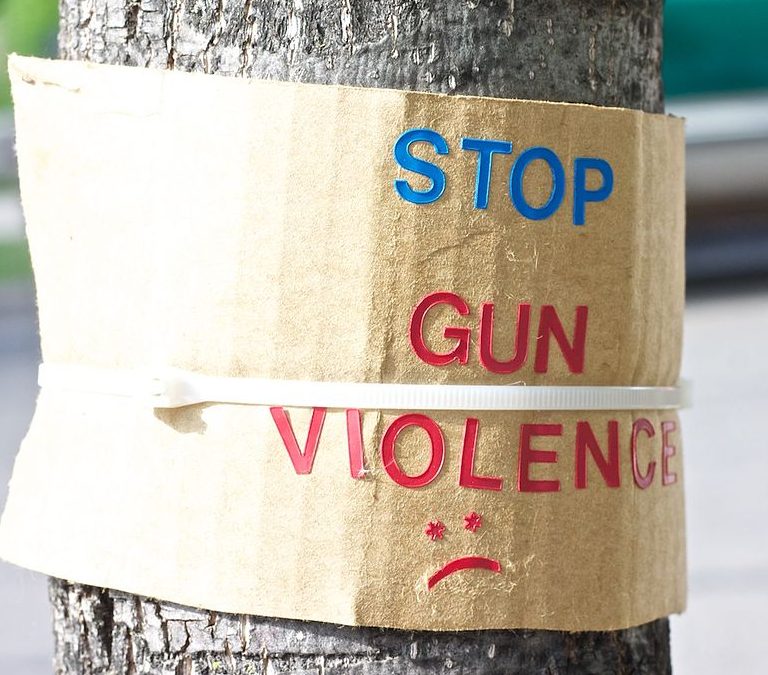
I could go back to old sermons and prayers offered in previous circumstances like this, change the names, and call it a day. I’ve got plenty to choose from. I could join in the usual responses at times like this and offer thoughts, prayers, and condolences but that stuff is getting pretty old and tired. And that doesn’t mean I am against prayer and compassion. But why can we not enact our prayers and compassion with change and actions? I could again plead a case for reasonable gun control and better mental health care. I could ask the usual questions: What causes these tragedies? How do we prevent them? What are we going to do now as a country, as a church, as individuals? But we continue asking the same questions, having the same arguments, and offering the same answers. Meanwhile people are dying. I could blame the NRA and politicians, the FBI, or our society in general. But that seems like a distraction and one-upmanship.
I don’t want to do any of those things today. And it’s not because those things are neither necessary nor relevant. I think they are. We need to do something. But we continue to say, ask, and do the same old things and nothing changes, least of all us. So I want to try and deepen the conversation and ask a different question. Instead of talking about responses and asking what we should do, maybe there is a prior question that needs to be asked. Maybe we should begin thinking about who we want to be and whether what is happening truly reflects who we are or who we want to be. To do otherwise is to once again move the conversation outside of ourselves and make it about them, whoever “them” might be for each of us. This is about us. I cannot help but recall the words of Rabbi Abraham Joshua Heschel, words I’ve spoken to you before, “Few are guilty, but all are responsible.”
Who do I want to be in light of this most recent shooting? Who do you want to be? What does it mean to be a Christian at this time and in these circumstances? That’s personal. That’s about each one of us. The gospel isn’t just a nice story about Jesus that gets read on Sunday. It’s a choice, a temptation, a way of being. Who do we want to be? It’s the kind of question that arises in the wilderness of life.
Here’s another way of asking the question: What does our baptismal identity look like and mean in the wilderness? That’s the question with which Jesus is struggling. He was baptized and immediately the spirit drove him into the wilderness. Our baptismal identity is always at risk in the temptations. And I don’t mean that God might withdraw or cancel that identity but that we might set it aside and become someone other than who God has declared us to be. That’s the issue in today’s gospel (Mark 1:9-15).
At Jesus’ baptism God declares Jesus to be God’s Son, the beloved, with whom God is well pleased. That is Jesus’ baptismal identity. That’s who he is before he ever enters the wilderness, before he ever faces the first temptation, before he ever teaches, heals, preaches, or walks on water. Now he must learn what that means in the wilderness of life. It’s one thing for God to believe and declare Jesus to be the beloved Son with whom God is well pleased, but it’s another for Jesus to believe that for himself, and let everything he does arise from that baptismal identity. That’s the temptation and struggle in the wilderness. It was for Jesus and it is for us. And today that wilderness is a mass shooting at a high school in Florida. We have once again stepped into the wilderness of gun violence.
The wilderness temptation, however, isn’t so much about choosing what we will do or not do, but choosing who we will be or not be. The identity we choose will determine what we do or don’t do. Do we choose our belovedness or do we choose something less than being the beloved?
Jesus didn’t go to the wilderness to prove something to God but to learn for himself who he is, what it means to be a beloved child of God, and the cost that carries. That’s true for us as well. That’s our wilderness journey whether in the wilderness of gun violence, the wilderness of a broken marriage or friendship, the wilderness of chronic illness, the wilderness of sorrow and loss, or the wilderness of a shattered dream. The wilderness tempts us to forget who we are or to believe we are less than who God has declared us to be.
The temptations we face come from within not from outside of us. The deceiver and the adversary that tempts is a voice from within us. See if any of this sounds familiar.
- Have you ever acted a particular way and presented a particular persona in one situation or with one group of people but in a different situation or with a different group changed how you acted or the persona you presented?
- Haven’t there been times when you were conflicted, one part of you said this and another part said that?
- Have you ever claimed a particular value or belief for yourself but then said or did the exact opposite, contradicted your own values and beliefs?
- Have you ever kept quiet and been afraid to speak the truth because it was unpopular or costly? Do you ever go along just to get along?
- Have you ever looked in the mirror of life and not recognized yourself or not liked what you saw? Have you ever wanted to be more than what you had become?
Ultimately, those conflicts and contradictions are about our identity. If we are baptized into the life of Christ, declared to be beloved children of God; if that’s our given identity shouldn’t it also be the identity that governs who we are, the words we speak, and the actions we take? Shouldn’t that be the thread that runs through our life with all people and in all situations? Shouldn’t we be and act like God’s beloved in this current wilderness?
The wilderness of life is where we face the truths and untruths about ourselves. It’s where we discover for ourselves who we are and to whom and what we give our loyalty. It’s where we see the values that govern our lives. I wonder what truths and untruths about us individually, as a nation, and as a church are being revealed by the Florida shooting.
Who have we become that these types of shootings continue? Is that really who we want to be? I want us to be more than that. We are better than that and our baptism asks more of us than that.
Are we Christians in name only but not action? On Sunday mornings in the church but not the rest of the week in the rest of the world? We happily wear Christ’s cross around our necks but are we willing take up our own and follow him? Are we unwilling to deny ourselves and pay the cost it takes for another to live? What would taking up our cross look like in light of the Florida shooting? What does repentance mean in the wilderness of gun violence? At what point do we risk betraying our baptismal identity? Have we reached that point?
I do not ask those questions as a judgment or criticism of you or anyone else. They are the questions in my head and the struggles in my heart. That’s all I’ve got to give you. I have no answers. I have only my baptismal identity, the wilderness, and my struggle to put the two together.
Who do we want to be? Do we truly want to be and live as the beloved children of God?
Those are more than just questions to be answered. They are choices to be made and lived. We choose our belovedness. We choose the belovedness of one another. We choose the belovedness of those who died and those who now grieve. And, yes, we choose the belovedness of Nikolas Cruz.
What does that choosing look like in your life? Who do we want to be?


 Interrupting the Silence
Leave a reply to Mortality And The Fragility Of Life – An Ash Wednesday Sermon On Matthew 6:1-6, 16-21 – Interrupting the Silence Cancel reply