
The Why Question
Years ago I was talking with John, one of my best friends. I was telling him about something that had happened to me. I no longer remember what it was but I vividly remember wanting to know why it had happened. I wanted an explanation, a sense of security, maybe even a culprit to blame.
Haven’t you had conversations like that? Haven’t there been times when you needed an explanation and wanted to know why? I wonder if you have a why question today.
Maybe you’re trying to make sense of what is happening today across our country and throughout the world. Maybe it’s more personal; about a loss or disappoint or something that didn’t go your way despite your best prayers and efforts. Maybe you’re looking for God and some overarching plan for your life.
“Why did this happen?” I asked John. “I need to know why.” I was struggling to make sense of my life and world. I was trapped in my why question. As I was repeating my question for the umpteenth time he interrupted and said, “And what would you do if you had that information?”
“Well,” I said. “Well,” but I didn’t have an answer. I was silent. After a while I said, “I don’t know. I never thought about that.” I realized John was inviting me to ask a different question, a better question.
I could persist with my why question or I could ask myself a deeper and more meaningful question: What will I do now that this has happened? Who do I want to be? Will I be more than what has happened to me? How do I want to live my life in light of what has happened?
I think that’s the choice Jesus is setting before us and the people in today’s gospel (Luke 13:1-9). He doesn’t explain why Pilate murdered the Galileans or why the tower of Siloam fell killing eighteen. He doesn’t even talk about Pilate or the tower. Instead, he says, “Unless you repent you will all perish just as they did.”
That sounds pretty harsh, doesn’t it? What do you make of that? Is it a threat? A punishment? I don’t think so. I think Jesus is calling us to the decisive moment. I spoke about that last week and the week before.
Decisive moments are threshold moments of decision about who we are and what it means to be uniquely us. They ask something of us. They reveal our values, priorities, and commitments. They transform our lives and point us in a new direction. They make a difference in the lives of others.
More often than not the why question chains us to the past. The decisive moment is an invitation to move forward.
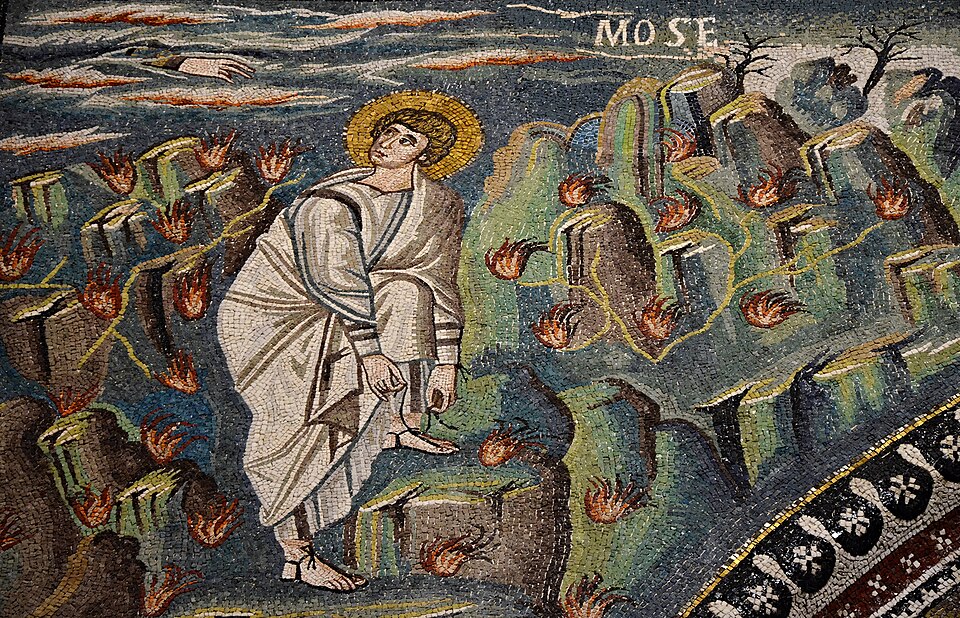
The Burning Bush
What if the decisive moment is always before us like the burning bush in today’s Old Testament reading (Exodus 3:1-15)? I’ve often thought of the burning bush as unique or exclusive to Moses, but what if it’s not?
What if the burning bush, the decisive moment, is always before us but we often pass by or avoid it. What if Moses wasn’t the first or only one to see the burning bush? The rabbis of old say that others passed by the bush while it was burning but only Moses turned aside.
Maybe the burning bush isn’t the miracle we often think it is. Maybe the miracle isn’t that the bush was burning but not consumed. Maybe the miracle is that Moses turned aside. And it brought him to a decisive moment in his life, a moment when God could do something about the misery of God’s people, their cries, and their suffering.
“So come,” God says to Moses, “I will send you to Pharaoh to bring my people, the Israelites, out of Egypt.”
“Who am I that I should go to Pharaoh?” Moses asks God, but I wonder if he was really asking himself. Who we are and who we are becoming are at the heart of every decisive moment.
I think we are at a decisive moment today in our country and our world. It’s not hard to make connections between Pilate, the tower of Siloam, Pharaoh, and our world today. They are as real and present today as in biblical times. They are images and metaphors of violence, tragedy, and the misery, cries, and suffering of people.
Where do you see Pilate, the tower of Siloam, or Pharaoh in our country today? In what ways are they present in your personal life and relationships?
We can persist in asking or arguing about why any of this is happening or we can ask a different question, perhaps a better question. Will we turn aside, or as Jesus says, repent, and do something about what we are seeing, hearing, and knowing?
If we really believe that God sees, hears, and knows the hurts and pains of God’s people (which is what God told Moses) shouldn’t that change how we speak to and about others and how we treat them? What if the misery, suffering, and cries of others are burning bushes asking us to be Moses and turn aside?
What burning bush is asking you to turn aside today? It might be about what is happening in our country or it might be more local or personal. It’s a question I’m asking myself.
Will you and I turn aside to find the courage, hope, and perseverance needed in this moment? Will we turn aside to care for the needs and interests of another? Will we turn aside from our usual rhetoric, assumptions, and questions? Will we turn aside to offer love, compassion, forgiveness?
Will we turn aside and bring good news to the poor, bind up the brokenhearted, release the captive, and let the oppressed go free? Will you and I turn aside to do justice, bring peace, welcome the stranger, and love the enemy? Will we turn aside from the fear, busyness, and distractions that keep us from seeing, hearing, and responding to the needs of others?
You’ve heard me ask those kind of questions a thousand times. Maybe I’m being repetitious or maybe the burning bush is always with us and asking us to turn aside.
What If We Are Moses?
Maybe every one of us is a Moses. Have you ever thought of that?
Do you remember what the name Moses means? It means to be drawn or taken from the water. Isn’t that who we are? Aren’t we the ones who have been drawn and taken from the waters of baptism?
Are we not the ones who have been drawn from the waters of baptism to persevere in resisting evil, to seek and serve Christ in all persons, to love our neighbor as ourselves, to strive for justice and peace among all people, to respect the dignity of every human being?
We have been drawn from those holy waters and made a new creation. “So come,” God says, “I will send you.”
But who am I that I should go to Pharaoh? It’s the burning bush question all of us must answer. Within that question is another question: What will happen to me if I go? Maybe that’s what Moses was really asking.
But maybe there’s a different question, a better question, to be asking ourselves: What will happen to them if I do not go?
____________________
Image Credit:
1. By Henry Ossawa Tanner – http://americanart.si.edu/collections/search/artwork/?id=23692, Public Domain, Wikimedia Commons.
2. By Carole Raddato – https://www.flickr.com/photos/carolemage/23744242384/, CC BY-SA 2.0, Wikimedia Commons.

 Interrupting the Silence
Leave a comment