Life Unburied – A Sermon for Easter; Mark 16:1-8

The collect and readings for Easter may be found here. The following sermon is based on Mark 16:1-8.

Icon of the Myrrh Bearing Women:
"He has been raised. He is not here."

Several years ago a woman told me that her great-grandson asked why she had so many wrinkles on her hands. “I’m old,” she told him. “Do you know what happens when you get old,” he asked. “You die and they bury you in the ground.” Before she could say anything he added, “But that’s ok; God comes and unburies you.”

What more is there to say? He’s just told the Easter story. It’s that simple. We get buried by the circumstances of life and God unburies us. Over and over God comes to the tombs of our lives and unburies us. That’s Easter. That is the power and love of God. It is as true as it is simple.

That truth speaks louder than the reality of our burials. There are so many ways in which our life gets buried: sorrow and grief, death and loss, fear and anxiety, perfectionism, anger, guilt, regret, resentment, self-hatred, the things we have done and the things we have left undone. Those are the stones that block our way. Those stones mark the many in ways in which we have suffered death, whether physically, emotionally, or spiritually.

With each stone we ask, “Who will roll away the stone? Who will do for me what I cannot do for myself?” That’s what the three women are asking as they walk to the tomb. It’s not really a question as much as it is a statement about their life and what they expect. Their life has been buried in loss, pain, and death. And they expect it to stay that way. They expect a stone of death too big, too heavy, too real for them to do anything about.

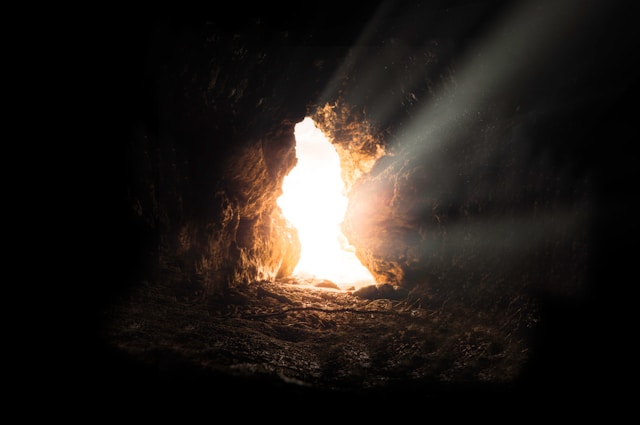
I wonder how often we live not only expecting to get buried but expecting to stay buried. We too quickly forget that for every burial there is an Easter. That’s what the women discovered as soon as they looked up. The stone of death, the stone that blocked their way, had already been rolled back.

That’s why we show up this day, year after year. We want to know that the stones of our tombs have been rolled back. We want to hear the story again and be reminded that the tomb is open and empty. We want to know ourselves as unburied. We want to hear one more time, “Christ is risen!”

“God unburies you,” he told his great-grandmother. The young man in the tomb told the women, “He has been raised. He is not here.” The Church proclaims, “Christ is risen!” However it is said, it is the good news we want and need to hear. Those are sacred words; words of hope, life, and resurrection. Everything has changed. We are a new people.

Recall the stones that have blocked your way.
Christ is risen and they are removed.

Name your loved ones who have died.
Christ is risen and they are unburied.

Count your sins.
Christ is risen and you are forgiven.

Stand before God.
Christ is risen and you are loved.

Removed, unburied, forgiven, loved. These are God’s Easter words to us, not just today but everyday. God has been enacting words of salvation, hope, and love to God’s people from the very beginning. It happened when we were created in God’s image and likeness. God’s Easter words parted the Red Sea and drew the Israelites into a new land and life. Those same words transplanted in humanity a new heart, a new spirit, and made us God’s people. Ezekiel stood in the Valley of Dry Bones watching God open graves and breathe life into dead skeletons. It never ends.

In just a few moments God will again enact those words of life and love in the baptism of GK. We will witness little GK be buried in the baptismal waters of death, be unburied, and made a new creation in Christ. I want you to look at him and see his life: the innocence, the possibilities, all that might be, the love, the beauty, the goodness. Those are not just about GK. He is a mirror of your unburied life. What are the very best hopes and prayers you have for him? Name them. They are the same hopes and prayers Christ has for you.

Today Christ offers GK, you, and me his unburied life. One day you look up and see that the stone of death has already been rolled away. Christ is risen. The unburied life comes to us in a thousand different ways. You overcome bitterness and anger, reconciling with another person. That is life unburied. You feel the presence of a loved one who has died but you weren’t even thinking about him or her. That is life unburied. You look at the world and weep with compassion for its pain. That is life unburied. You respond to another’s harsh words or actions with forgiveness rather than your own harsh words or actions. That is life unburied. You love without fear, holding nothing in reserve, offering all that you are and all that you have. That is life unburied. You feel a new sense of Jesus’ presence, a reality and connection that move beyond beliefs. That is life unburied.

Life unburied always presents itself as a new creation. So it is that the women in today’s gospel go to the tomb on the first day of the week, the day creation began. Everything is being made new. The sun has risen. It is the dawn of a new day declaring that the Son has risen. If Christ is risen then so are we. This new day is also our day, the day of the holy and unburied people of God.

So I wonder; what will we do with our new and unburied life?

Life on the Edge – A Sermon for Holy Saturday; Matthew 27:57-66

The collect and readings for Holy Saturday may be found here. The following sermon is based on Matthew 27:57-66.

Jesus is dead. His body is in the tomb.

We weren’t there that day, but we know what it is like when life takes us to the edge. It is a border where you know you cannot go back to the way things were. Life has changed. A loved one has died. A relationship has ended. A dream has forever been shattered. The life we so carefully planned has fallen apart. The walls of our security have been breached. What used to be is no longer. There’s nothing to go back to. This is life on the edge. The disciples knew that edge. So do we.

The Church calls life on the edge Holy Saturday. On one side it is bordered by Good Friday; on the other by the hope of Easter life and resurrection. But it’s not yet Easter and in the midst of profound loss and grief Easter can seem a long way off.

Holy Saturday is a time of waiting for the third day. It is a time of not knowing. It is a time of silence. The women in today’s gospel say nothing. They do nothing. They just sit. Joseph of Arimathea asks, for the body, cares for it, and then leaves. There’s not much else to do or that can be done.

We know we have to move on. But how? The way forward is not clear. There’s no where to go. Our entire world, it seems, has become a tomb and the tombs of our lives always look so secure.

They are secured not so much by sealing the stone and posting guards but by our own overwhelming sorrow, pain, and despair. Those things tell us nothing is getting out of the tomb. The silence of Holy Saturday says there are no good words to be spoken. The waiting of Holy Saturday says nothing is happening. The unknown of Holy Saturday says there is no future. Those are, however, illusions. Beneath the silence and stillness of Holy Saturday death trembles and hell cries out in fear.

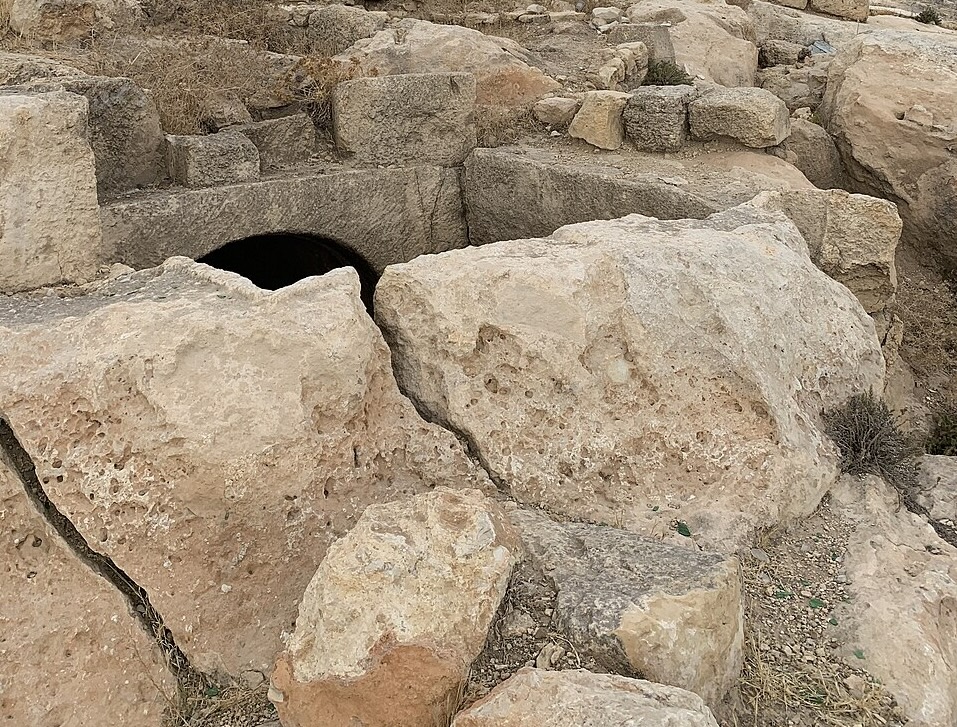
No matter how secure we have made our tombs, they can never be secured from the love of God. The depth of God’s love is every bit as deep as our tombs. In the Holy Saturday of life Christ descends into the depths of our tombs, into the hell of our lives, breaking the bonds of death, and setting the captives free. His love fills the tomb, permeates its walls, and transforms it into a womb of new birth and life.

Christ’s triumph is not apart from death, but within death. On Holy Saturday Christ is trampling down death by death and giving life to those in the tombs. All and only for love’s sake.

Icon for Holy Saturday:
The Harrowing of Hell

Who Holds the Cross of Christ?

Pilate asked Jesus, “Do you not know that I have power to release you, and power to crucify you?” (John 19:10) Pilate thinks he holds the cross of Christ. Jesus knows otherwise. How we see and understand the cross is determined by who we believe holds the cross.

In human hands the cross is imposed.
In God’s hands it is chosen.

In human hands the cross takes life.
In God’s hands it gives life.

In human hands the cross is the means of execution.
In God’s hands it is the means of reconciliation.

In human hands the cross is for punishment.
In God’s hands it is for salvation.

In human hands the cross is a tragedy.
In God’s hands it is a triumph.

In human hands the cross is an instrument of death.
In God’s hands it is the sword of life plunged into the heart of death.

In human hands the cross raises a question of what we believe about God.
In God’s hands it makes a statement of what God believes about us.

In human hands the cross tells a story of destruction.
In God’s hands it tells a story of love.

We adore you, O Christ, and we bless you,
because by your holy cross you have redeemed the world.

Icon of the Crucifixion of Jesus

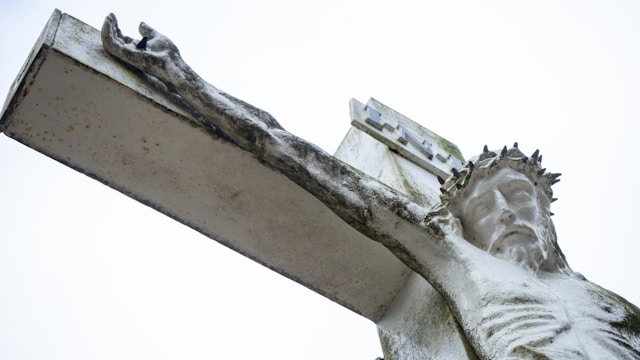
Crucifixion, A Love Story – A Sermon for Good Friday; John 18:1-19:42

The collect and readings for Good Friday may be found here. The following sermon is based on John 18:1 – 19:42.

I have come to believe that the crucifixion did not kill Jesus. Crucifixion is merely the external force and circumstance of his death. At a deeper level the cross points to the intense relationship between love and death. Love is the ultimate cause of Jesus’ death. The water of Jesus’ love that washed over his disciples’ feet at the last supper now bleeds out as love for all people. Wherever there is self-giving love there is death.

True love always involves some degree of dying: dying to one’s ego, one’s own desires and selfishness, one’s own preferences, one’s fears, one’s own safety and security. It is not the annihilation of one’s self but the giving of one’s self to another.

You who are married know the call to surrender your defenses, your fears, and your own agenda for the life and love of your spouse. You who are parents know the parts of your life you have given up or lost in loving your child. You who have ever reconciled with another, overcoming the barriers of bitterness and resentment, have allowed self-righteousness, the pride of being right, and the fear of being hurt again to die. You who have cared for another through a long illness, dementia, or addiction can name the many costs and deaths. You who have died in these and so many other ways also know that you have received back more life than you ever lost.

To love is to risk death and to refuse death is to deny love. The great love stories always end in death, not only in literature but also in life. The greatest and most profound story of love is Jesus’ death on the cross. That love is why we call this day good, Good Friday.

We, too often, misunderstand the cross in terms of extreme sacrifice rather than in terms of ultimate love, as the taking of life rather than the giving of life, as a tragedy rather than a triumph. Jesus does not hang on the cross as some bridge between us and God. Jesus is God on the cross choosing to love; choosing to love you, me, and all of humanity.

Despite what we know or believe about ourselves, despite what we see happening around us, despite our sins and the brokenness of our world, the cross is the ever present arc of God’s love stretching out to reach us. Wherever we are, no matter how far from God we may have wandered, or the path we have travelled, we are never too far away and we are never abandoned. The arc of God’s love is long, never ending, and knows no boundaries.

Christ died for us, not because we are bad people, worthless sinners, but because we are loved, because we are chosen, because we are his brothers and sisters, children of his Father.

The tree by which Adam and Eve fell is today the cross by which Christ is lifted up and draws all people to himself. Their falling down has become their lifting up. Through the cross, our falling down has become our lifting up. It is all and only for love’s sake. Love on the cross always has the final word and so Jesus can say, “It is finished.”

“It is finished.” There is nothing but love. There is only love.

All Are Washed, All Are Loved – A Sermon for Maundy Thursday; John 13:1-17, 31-35

The collect and readings for Maundy Thursday may be found here. The following sermon is based on John 13:1-17, 31-35.

One by one, Jesus kneels on the floor in front of each disciple. One by one, the water of his love washes over the feet of each disciple. No one is left out. Judas. Peter. The ones who say nothing. All are washed. All are loved.

Tonight’s liturgy holds before us a choice like no other liturgy in the church year. That choice is about vulnerability, intimacy, and love. It is, in some ways, more challenging, more real, more bodily, than many of us are comfortable with. Most days it is pretty easy to come to church. We sing, we pray, we receive communion, then we go to lunch with family and friends. We can too easily forget the challenge, the risk, the vulnerability, and the intimacy of eating the body and blood of another person, Jesus Christ.

Tonight is different. There will be body and blood but there will also be feet. Maybe tonight, however, is not as different as we think. The risk, vulnerability, and intimacy of eating his body and blood are the same risk, vulnerability, and intimacy of washing feet: humble, self-giving love.

Tonight Jesus offers his life in bread, wine, and washing. By his example and command we are to remove the shoes and socks of another, receive their feet, their life, into our hands, and wash. We are to remove our shoes and socks, place our feet, our life, into the hands of another, and be washed. This is the way of Christ, the way of love. It is a choice not just for tonight but every day and every night, not just in the liturgy but in the world.

Deep intimate love is, I believe, what attracts and draws some to this liturgy. I wonder, though, if it is also what keeps many others away. It is why some will wash and be washed and many will not. Tonight, however, is not simply a choice of whether to wash feet, but a choice to love or not love.

Jesus chose to love. Not some, but all. That is the choice before us. We cannot choose to love only those whom we like, whom we deem deserving, for whom we have good feelings, those who look, think, or act like us. It is all or nothing. If we do not love all, we love none. Love, for Jesus, is not about feelings and emotions but about a choice. In Jesus’ teaching if you have feet you get washed, regardless of where those feet have been or where they are going. That is the example and commandment he sets before his disciples and us.

The first person the disciples will have to choose to love or not love is Judas, the one who turns away, the one who walks in the night, the one who betrays. That, also, is our first choice. Every one of us has at least one Judas in our life. Every one of us has been Judas to someone else. Sometimes we have been Judas to ourselves.

I give you a new commandment, that you love one another. Just as I have loved you, you also should love one another. By this everyone will know that you are my disciples, if you have love for one another.

Who is your Judas? Name him or her and then choose. Choose to wash and love as Jesus has washed and loved you.

Maundy Thursday Honor

“So if I, your Lord and Teacher, have washed your feet, 
you also ought to wash one another’s feet.”
- John 13:14

Washing feet:

+ The honor of being loved, served, and washed by Jesus.

+ The honor of loving, serving, and washing as Jesus.

+ The honor of loving, serving, and washing Jesus in others.

The Fragrance of Holy Week

Most of our time and attention in Holy Week are given to the triduum and rightly so. The three days of that period encompass Maundy Thursday, Good Friday, and Easter Sunday. They are, perhaps, the most holy days of the year. If they hold that kind of prominence, then maybe we ought to look at what leads us into those days, Monday, Tuesday, and Wednesday of Holy Week. There are Eucharistic propers for each of those days.

On Monday Mary anoints Jesus and Judas complains. (John 12:1-11) On Tuesday Jesus says, “Unless a grain of wheat falls into the earth and dies, it remains just a single grain; but if it dies, it bears much fruit.” He foretells his being lifted up. (John 12:20-36) On Wednesday Jesus feeds, Judas betrays, and night comes. (John 13:21-32)

These three days are held together by the anointing Mary does on Monday. Each day the fragrance of that anointing seeps a little deeper into Jesus. It moves from his body, to his soul, to his spirit. There is no part of Jesus’ humanity that is not anointed and prepared for death. On Monday the fragrant nard is rubbed onto Jesus’ feet. On Tuesday the fragrance of his death has soaked into his soul. “Now my soul is troubled. And what should I say– `Father, save me from this hour’? No, it is for this reason that I have come to this hour. Father, glorify your name.” On Wednesday his spirit is marinated in that fragrance. “At supper with his friends, Jesus was troubled in spirit, and declared, ‘Very truly, I tell you, one of you will betray me.’”

There is now no turning back. He has become for us “a fragrant offering and sacrifice to God” (Eph. 5:2). That fragrance will waft through Good Friday, permeate the walls of the tomb on Saturday, and fill the world on Sunday. The fragrance of death is, in reality, the perfume of life.